(
)
Why is my website traffic high but my conversion rate low?
You're driving traffic like a Formula 1 race, but your conversion rate looks like a Sunday driver. Welcome to the most expensive problem in digital marketing: the leaky bucket syndrome.
The Bottom Line Up Front
High traffic with low conversions means you're attracting the wrong visitors, creating friction in your user experience, or failing to communicate value clearly enough. It's like throwing a party where everyone shows up, looks around for five seconds, and leaves. The good news? Each leak is fixable: and fixing them is dramatically cheaper than buying more traffic.
Why aren't my visitors converting?
Your website is hemorrhaging potential customers, and it's usually not because your product sucks. It's because your digital experience is working against you.
Here's the reality: most businesses obsess over traffic metrics while ignoring the fact that their site is actively pushing buyers away. You wouldn't pour water into a bucket with holes in it, yet that's exactly what you're doing when you run ads to a broken website.

What causes high traffic but low conversion rates?
You're attracting the wrong crowd
Ranking for broad, high-volume keywords feels great until you realize those visitors have zero buying intent. You're getting traffic from people searching "what is conversion rate optimization" when you need people searching "hire CRO agency."
Example: An e-commerce fashion brand was ranking #1 for "summer style tips" and getting 50,000 monthly visitors. Conversion rate? A dismal 0.4%. Why? They were attracting browsers looking for free fashion advice, not shoppers ready to buy. After refocusing on product-specific keywords like "linen midi dresses free shipping," their traffic dropped to 15,000: but conversions jumped to 2.8%, tripling revenue.
This is the traffic quality vs. traffic quantity trap, and it's burning your marketing budget.
Your landing pages are conversion killers
The disconnect between your ad copy and landing page content is probably costing you 40% of your potential conversions right now. Visitors click an ad promising "30% off sustainable activewear" and land on a generic homepage with no mention of the sale.
Your landing page has 3 seconds to prove it's worth staying. If visitors can't immediately understand what you offer and how to get it, they're gone. Common landing page sins include:
No clear headline that matches the ad or search query
Buried or weak calls-to-action (CTAs) that visitors can't find
Cluttered layouts that overwhelm instead of guide
Generic stock photos that scream "template website"
Missing trust signals like reviews, testimonials, or security badges
The fix: Create dedicated landing pages for each campaign with laser-focused messaging. Your headline should echo the exact pain point or promise that brought them there.

Your site speed is killing conversions before they start
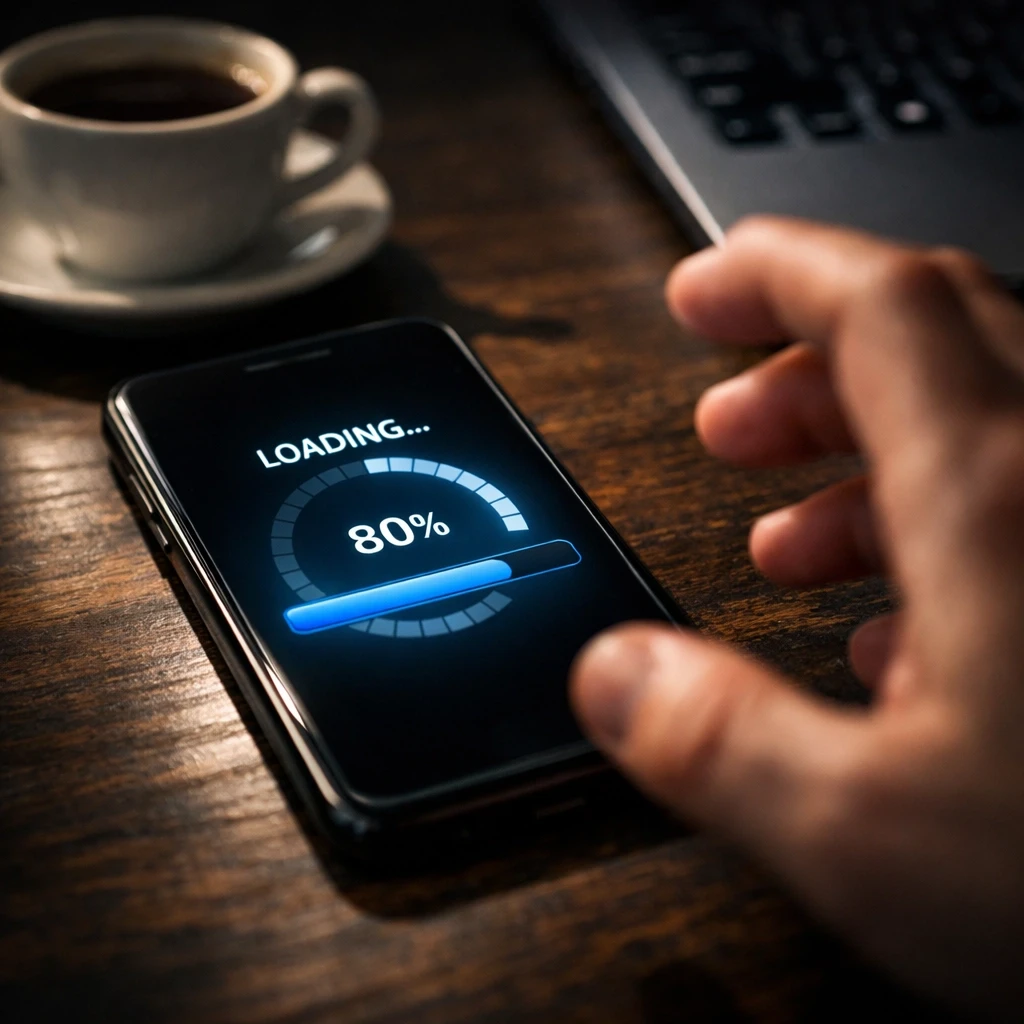
A 1-second delay in page load time reduces conversions by 7%. That's not a typo: seven percent.
If your site takes 5 seconds to load on mobile (and most do), you've lost a third of your potential customers before they even see your offer. They're not patient. They're not understanding. They're gone.
Google's research shows that 53% of mobile users abandon sites that take longer than 3 seconds to load. You can have the best product, the sharpest copy, and the most compelling offer in the world: none of it matters if your site is slower than dial-up.
Your mobile experience is a disaster
Over 60% of web traffic now comes from mobile devices, yet most websites are still designed with desktop users in mind. Your mobile visitors are squinting at tiny text, mis-tapping buttons, and rage-quitting your checkout process.
Mobile conversion optimization isn't about shrinking your desktop site: it's about reimagining the entire experience for thumbs, not mice. This means:
Touch-friendly buttons (minimum 48x48 pixels)
Streamlined forms that don't require typing a novel
One-tap payment options like Apple Pay or Shop Pay
Navigation that doesn't require a microscope
Example: A SaaS company noticed their mobile traffic was 58% of total visits but only generated 12% of conversions. After redesigning their mobile checkout flow and adding one-click social login, mobile conversions increased by 340% in 60 days.
Your messaging is vague and forgettable
Your website probably says something like "We provide innovative solutions for your business needs." Cool story. What does that actually mean?
Visitors don't convert when they're confused. They convert when you clearly articulate exactly how you solve their specific problem. Generic marketing speak is white noise. Your value proposition should be so clear that a distracted person scrolling on their phone at a red light immediately gets it.
Replace "innovative solutions" with "We increase your Shopify store's conversion rate by 35% in 90 days or you don't pay." See the difference?
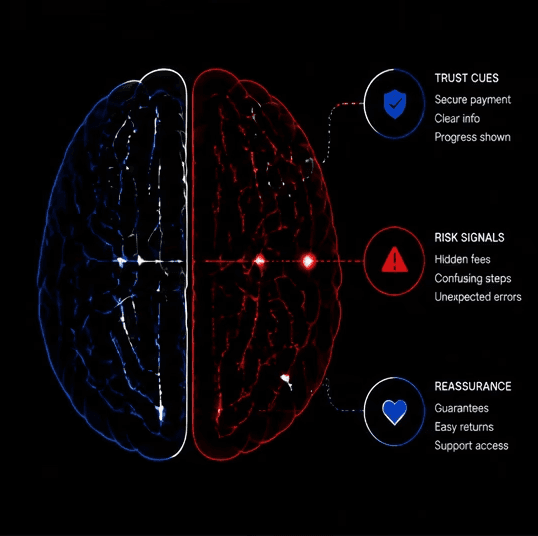
You're not building trust
Would you buy from a website with no reviews, no visible contact information, no security badges, and stock photos that look like they're from 2003? Neither will your visitors.
Trust signals matter more than you think:
Customer reviews and testimonials with real names and photos
Clear contact information (not just a form: an actual phone number and address)
Security badges and SSL certificates
Case studies with specific results
Industry certifications and partnerships
Professional, consistent branding
The absence of these elements doesn't just fail to build trust: it actively creates suspicion. In an era of sophisticated scams, visitors are (rightfully) paranoid.
How do I fix my conversion rate?
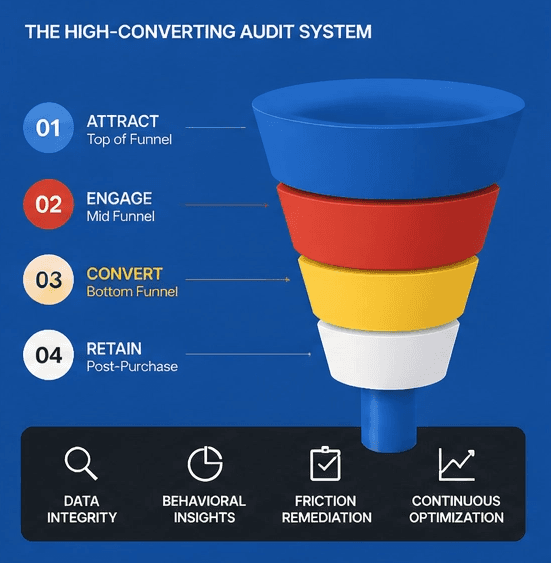
Start by identifying where your bucket is leaking. You can't fix what you don't measure.
This is where most businesses fail: they make random changes based on hunches instead of data. At DEUX Labs, we've seen companies waste months tweaking button colors while ignoring the fact that their checkout process requires seventeen form fields.
Here's your roadmap:
Run a comprehensive CRO audit to identify friction points in your user journey. Use heatmaps, session recordings, and funnel analysis to see where people are dropping off.
Analyze your traffic sources and determine which channels bring qualified visitors vs. tire-kickers. Cut or optimize the channels that bring high-bounce, low-intent traffic.
Speed test your site on real mobile devices, not just your MacBook Pro. Fix anything that takes longer than 2 seconds to load.
A/B test one element at a time starting with your highest-traffic pages. Change your headline, simplify your CTA, reduce form fields: but only test one variable at a time so you know what actually works.
Interview customers who converted and those who abandoned. Ask them specifically what almost stopped them from buying.
The businesses winning in 2026 aren't the ones with the most traffic: they're the ones converting the traffic they already have.
What should I do right now?
Stop pouring money into traffic acquisition until you've plugged the leaks. A 1% improvement in conversion rate has the same impact as a 100% increase in traffic: but costs a fraction as much.
Start with your highest-traffic landing pages. Identify the biggest point of friction. Fix it. Measure the result. Repeat.
If you're serious about turning your traffic into revenue instead of vanity metrics, talk to our team at DEUX Labs. We've helped dozens of businesses stop the bleeding and start converting: typically seeing 35-50% conversion rate improvements within 90 days.
Your traffic isn't the problem. Your conversion experience is. Let's fix it.
More Insights
Explore ideas, tips, and trends to elevate your brand.