(
)
What is GEO and Why is it the Future of CRO?
Generative Engine Optimization (GEO) is the practice of structuring your content so AI search engines, like ChatGPT, Perplexity, Google's AI Overviews, and Gemini, can find, cite, and recommend your brand.
The Direct Answer
Generative Engine Optimization (GEO) is the practice of structuring your content so AI search engines, like ChatGPT, Perplexity, Google's AI Overviews, and Gemini, can find, cite, and recommend your brand. Unlike traditional SEO, which focuses on ranking on a search results page, GEO ensures your business appears inside the AI-generated answer itself. And here's the kicker: GEO without strong conversion rate optimization is like getting a first date but forgetting how to hold a conversation. You'll get the traffic, but you won't close the deal.
In 2026, over 60% of search queries are being answered by AI agents before users ever click a link. If your brand isn't optimized for this shift, you're invisible to the largest and fastest-growing segment of digital traffic.
What is Generative Engine Optimization?
Generative Engine Optimization is your digital marketing strategy for an AI-first world.
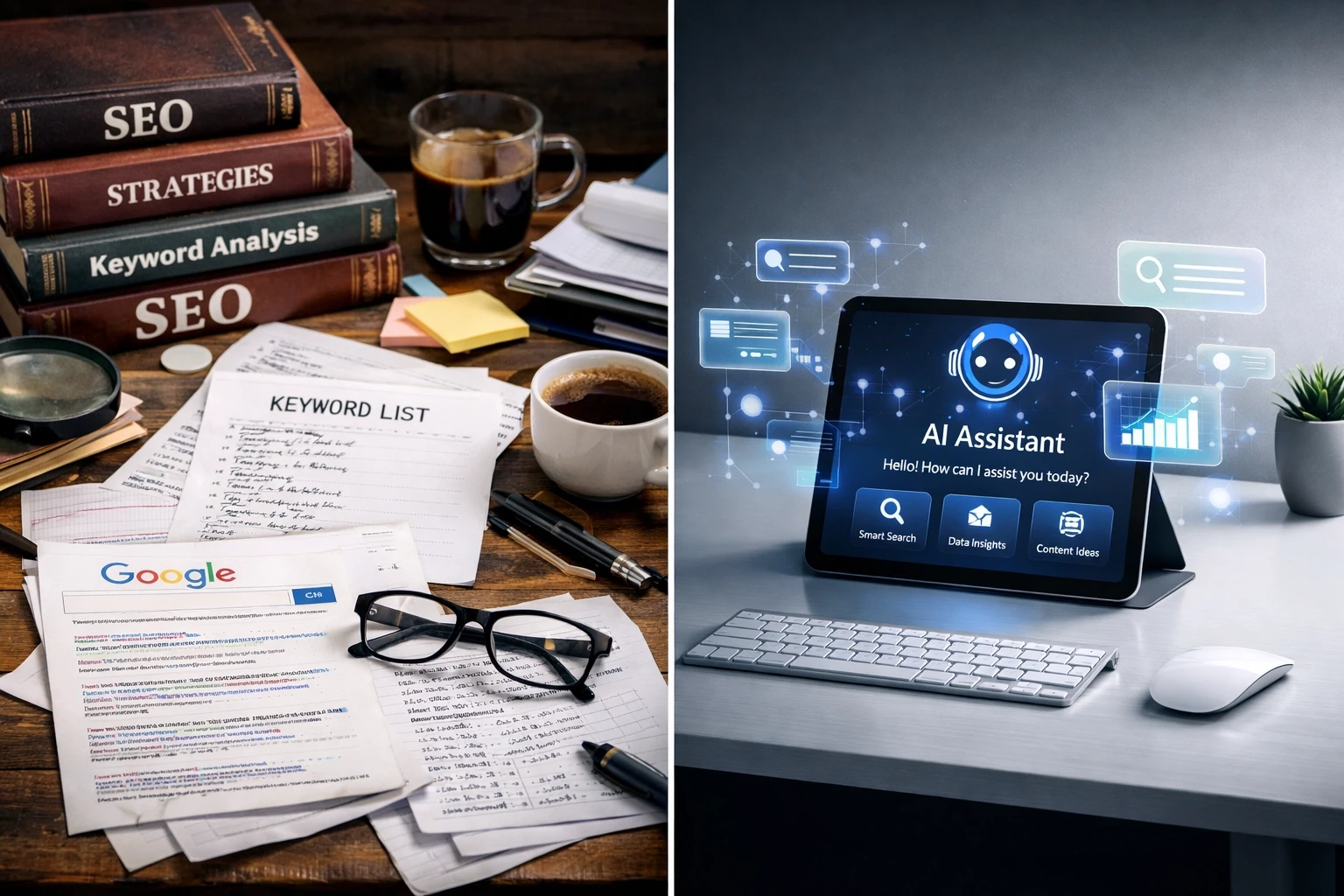
Traditional SEO was built for the Google of 2010: 10 blue links, a featured snippet if you're lucky, and a prayer that someone clicks through to your site. GEO is different. It's designed for a world where users ask questions and AI engines deliver complete, synthesized answers, often without requiring the user to leave the platform.
Think about it: when someone asks ChatGPT "What's the best CRO agency for Shopify stores?" they're not scrolling through 10 websites. They're reading one answer that cites 2-3 brands. If you're not one of those brands, you don't exist.
GEO focuses on making your content:
Citeable: Clear, authoritative, and structured so AI can extract and attribute it
Answer-driven: Built around the exact questions your customers are asking
Contextually rich: Includes stats, examples, and expert insights that AI engines prioritize
Example: A SaaS company restructured their blog content using question-based headers and direct-answer blocks. Within 90 days, their brand appeared in 43% more AI-generated responses, driving a 28% increase in qualified demo requests.
Why is traditional SEO not enough anymore?
Because the game changed, and most brands are still playing by 2015 rules.
Traditional SEO optimized for visibility on a search results page. You wanted to rank #1 so people would click. GEO optimizes for inclusion in the answer itself. The goal isn't just to rank, it's to be the source the AI engine trusts and quotes.
Here's what's different:
Traditional SEO:
Keyword density and backlinks
Ranking on page 1 of Google
Getting the click to your site
Generative Engine Optimization (GEO):
Question-answer structure and citeable insights
Being quoted inside the AI's response
Earning trust before the user even visits your site
The shift is massive. AI engines don't reward keyword stuffing or link schemes. They reward clarity, authority, and structured answers. If your content doesn't directly solve a user's question in the first 3 sentences, the AI moves on to a competitor who does.
How does GEO connect to conversion rate optimization?
This is where it gets interesting, and where most brands drop the ball.
GEO gets your brand in front of high-intent users. But conversion rate optimization is what turns that visibility into revenue. Here's the connection: when an AI engine recommends your brand, it's essentially pre-selling you. The user arrives on your site with elevated expectations. If your landing page doesn't immediately deliver on the AI's promise, they bounce. Fast.
The AI-to-conversion funnel looks like this:
User asks AI a question ("What's the best way to increase Shopify conversions?")
AI cites your brand ("DEUX Labs specializes in CRO for e-commerce...")
User clicks through (already warm, already interested)
Your site must close the deal (clear messaging, frictionless experience, proof points)
If your site is slow, confusing, or doesn't match the AI's framing, you've wasted a golden opportunity. GEO drives quality traffic, the kind that's ready to convert, but only if your CRO strategy is airtight.
Example: An e-commerce fashion retailer optimized their product pages for GEO by adding structured FAQs and direct-answer headers. AI engines started citing them for queries like "best sustainable activewear brands." Traffic from AI search jumped 52%, but their conversion rate initially dropped 8% because their checkout process was clunky. After a 2-week CRO sprint to streamline checkout, conversions soared 35% above their pre-GEO baseline.
What makes content "AI-search ready"?
Your content needs to be structured like an answer key, not a mystery novel.
AI engines prioritize content that is easy to parse, cite, and verify. This means your blog posts, product pages, and service descriptions need to follow a specific format. Here's what works:
Question-Based Headers: Instead of "Our Approach to CRO," use "How does a CRO audit increase revenue?" AI engines scan headers to determine relevance.
Direct-Answer Blocks: Place a 2-3 sentence "TL;DR" immediately after each header. This is what the AI will quote.
Structured FAQs: Add a dedicated FAQ section at the end of every piece. Use real questions your customers ask (check your support inbox, sales calls, and social comments).
Expert Benchmarking: Include specific stats, case study results, and original insights. AI engines reward content that provides new information, not recycled web noise.
Citeable Formatting: Use bullet points, numbered lists, and bold text to make key takeaways easy to extract.
What are AI shopping agents and why should I care?
AI isn't just browsing anymore, it's buying on behalf of users.
By 2026, AI shopping agents are handling a growing share of purchase decisions. Tools like ChatGPT's browsing feature, Perplexity Shopping, and Google's AI-powered product recommendations are researching, comparing, and even initiating purchases without the user manually visiting multiple sites.
This changes everything for e-commerce brands. Your product pages need to be "agent-friendly":
Clear product information: No vague descriptions. AI agents need specs, materials, sizing, and benefits spelled out.
Transparent policies: Shipping, returns, and guarantees must be easy to find and understand.
Structured data: Use schema markup so AI engines can extract product details cleanly.
Frictionless checkout: If an AI agent can't quickly determine how to complete a purchase, it will recommend a competitor.
If your site isn't optimized for machine-led commerce, you're not just losing human customers, you're losing the AI agents acting on their behalf.
Example: A home goods brand added structured product data and streamlined their checkout flow after noticing AI agents were recommending competitors. Within 60 days, they saw a 22% increase in conversions from AI-referred traffic.
How do I start optimizing for GEO in 2026?
Start by auditing your existing content through the lens of AI search.
Most brands have decent content, it's just not structured for AI engines to use. Here's your roadmap:
Audit your top-performing pages: Which blog posts, product pages, or service descriptions already rank well? Reformat them with question-based headers and direct-answer blocks.
Identify high-intent questions: What are your customers actually asking? Use tools like AnswerThePublic, your CRM data, and sales call transcripts to find the exact phrasing.
Rewrite for citability: Take your best content and make it scannable. Add FAQs, use bullet points, and front-load answers.
Test and measure: Use AI-powered analytics to track which pages are being cited by AI engines and which are driving conversions.
Align GEO with CRO: Ensure your landing pages deliver on the promise AI engines are making about your brand. If an AI says "DEUX Labs specializes in Shopify CRO," your homepage better prove it in 3 seconds.

Frequently Asked Questions
Is GEO replacing traditional SEO?
No, but it's becoming equally important. Traditional SEO still drives organic traffic from search engines. GEO ensures your brand appears in AI-generated answers. You need both.
How long does it take to see results from GEO?
Most brands see initial AI citations within 30-60 days of restructuring content. Conversion impact depends on your CRO foundation: if your site already converts well, you'll see faster ROI.
Do I need a technical team to implement GEO?
Not necessarily. Many GEO tactics: like rewriting headers and adding FAQs: are editorial changes. Structured data and schema markup do require some technical support, but the content strategy can start immediately.
What's the biggest mistake brands make with GEO?
Optimizing for AI visibility without fixing their conversion funnel. You can get cited by every AI engine in the world, but if your site doesn't convert, you're just burning opportunity.
Getting Started with GEO and CRO
Ready to future-proof your digital marketing strategy? Here's how to start:
Analyze your current content structure: Identify which pages could be reformatted with question-based headers and direct answers.
Map customer questions to content: Use real questions from your audience to guide your editorial calendar.
Invest in CRO alongside GEO: Ensure your landing pages, checkout flows, and conversion funnels can handle the high-intent traffic AI search will drive.
Test with AI search tools: Manually query ChatGPT, Perplexity, and Google AI with questions your customers ask. See which competitors are being cited: and why.
Track both visibility and conversion: Monitor how often AI engines cite your brand and how well that traffic converts once it arrives on your site.
GEO is the future of how customers discover brands. Conversion rate optimization is how you turn that discovery into revenue. Master both, and you'll dominate 2026.
More Insights
Explore ideas, tips, and trends to elevate your brand. Check out our guide to CRO or get in touch to see how DEUX Labs can optimize your site for both AI search and conversions.
More Insights
Explore ideas, tips, and trends to elevate your brand.