(
)
The Anatomy of a High-Converting Audit: Why Your 'Leaky Bucket' Analysis is Failing
Most executives are tired of hearing the phrase "leaky bucket." It’s the ultimate marketing cliché, a shorthand for "your website is losing money and we don't know why." You’ve seen the reports: a colorful funnel showing a massive drop-off between the product page and the cart, followed by a recommendation to "change the CTA color" or "shorten the form."
![[HERO] The Anatomy of a High-Converting Audit framed as a diagnostic module inside the UX-to-Conversion Operating System.](https://framerusercontent.com/images/jURJpDccR5sPYbowI4XWFLqccIU.webp)
But here is the problem: most "leaky bucket" analyses are surface-level. They treat your website like a plumbing problem when it’s actually a systems problem. If you’re a DTC founder or a SaaS executive, a generic audit that points out the obvious doesn't just waste time, it sends your team chasing "fixes" that don't move the needle on CAC, LTV, or revenue efficiency.
To actually move revenue, you need to move beyond simple funnel math and treat the audit as the diagnostic stage of a UX-to-Conversion Operating System. That means identifying the Growth Constraints limiting performance across Data, Experience, Decision-making, and Execution, then using those findings to build a permanent CRO capability inside the business instead of producing another one-off report.
Why is the 'Leaky Bucket' metaphor actually hurting your growth?
When you look at a standard website audit checklist, you’ll see metrics like bounce rate and exit rate. These are fine for a health check, but they are terrible for operating a growth system.
The leaky bucket metaphor assumes that the goal is to plug every hole. In reality, some drop-offs are healthy and some are expensive. If you’re a high-end SaaS platform, you want low-intent visitors to self-select out early. If you’re a premium DTC brand, you don't want to optimize for the "accidental clicker" who will just inflate your return rate later.
That’s the real difference between the "Leaky Bucket" mindset and a UX-to-Conversion Operating System. The bucket view asks, "Which tactic should we try next?" The operating system asks, "What Growth Constraints are preventing this business from consistently turning traffic into revenue?" One is a patch job. The other is a capability.
High-converting audits prioritize qualified drop-offs. This means segmenting your data to see where your best-fit customers are hitting friction. If your highest-LTV cohort is dropping off at the pricing page, that’s a Growth Constraint worth diagnosing. If a bot or a job seeker leaves your landing page, that’s just noise. Most audits fail because they try to optimize for the average, and as the saying goes, if you optimize for everyone, you optimize for no one.
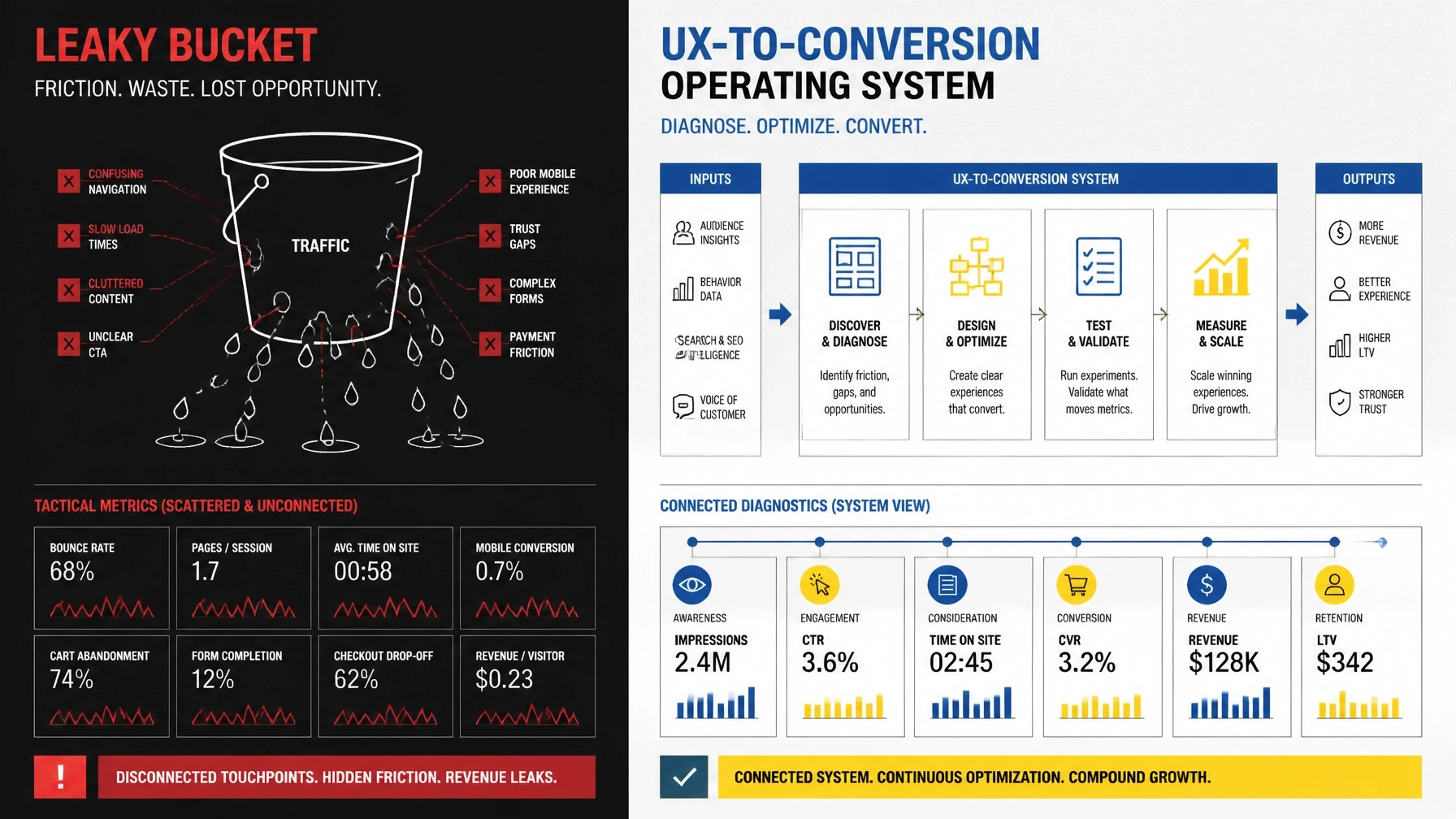
Visual: A high-contrast Swiss/Bento comparison of "Leaky Bucket" thinking (surface metrics, isolated fixes, friction in red) vs. "UX-to-Conversion Operating System" thinking (structured data flow, modular diagnostics, and system-level decision-making), illustrated in a red-lead Industrial Bauhaus style.
What is the diagnostic layer of the UX-to-Conversion Operating System, and why is your audit missing it?
Most CRO services focus on the interface layer: the buttons, the fonts, the layout. A high-converting audit should go deeper and act as the initial diagnostic stage of the UX-to-Conversion Operating System. In practice, that means spending far more time identifying Growth Constraints before rushing toward recommendations.
This is where four pillars become core:
Data: Is tracking reliable enough to separate signal from noise?
Experience: Where does the journey create hesitation, distrust, confusion, or unnecessary effort?
Decision-making: Can the business interpret findings clearly enough to prioritize the right work?
Execution: Does the team have the velocity and ownership to ship changes and learn from them?
A high-converting audit should ask three critical questions:
What is the customer actually trying to do at this point in the journey?
Which Growth Constraint is blocking momentum right now?
Can the business act on that diagnosis consistently enough to turn insight into lift?
For example, a SaaS company might find a "leak" on their demo booking page. A UI-level audit might suggest making the "Book Now" button bigger. A diagnostic audit inside the UX-to-Conversion Operating System might find that the real Growth Constraint sits across multiple pillars: weak social proof in the Experience, unclear attribution in the Data, slow approvals in Decision-making, and limited dev bandwidth in Execution. The fix isn't a bigger button; it’s a psychology-driven change plus a better operating cadence around how your team prioritizes and ships improvements.
That’s the point. The audit isn't valuable because it produces observations. It’s valuable because it gives you a structured diagnostic that can mature into a permanent CRO capability inside the business.
Technical bugs vs. psychological friction: Which one is killing your revenue?
Think of your website like a physical retail store.
A technical bug is the front door being locked during business hours. It’s a 404 error, a broken checkout button, or a site that takes 10 seconds to load on mobile. These are binary: it works or it doesn’t.
Psychological friction is the store being open, but the lighting is dim, the salesperson is aggressive, and the prices aren't clearly marked. You can buy, but you don't want to.
Most DTC and SaaS sites have already fixed their major technical bugs. They are losing a bigger share of revenue to friction. Inside a UX-to-Conversion Operating System, that friction shows up as Growth Constraints inside the Experience pillar, then cascades into weaker conversion rates, lower monetization efficiency, and noisier decisions elsewhere in the system.
Examples of psychological friction include:
Vague Copy: "Empowering your workflow" means nothing to a busy executive.
Hidden Costs: Not showing shipping or tax until the final step (a classic DTC killer).
The "Wall of Text": Forcing a user to read 500 words of features before they understand the benefit.
By ranking UX changes that lift conversions, you can see that the most impactful shifts almost always involve removing cognitive load, making it easier for the brain to say "yes."
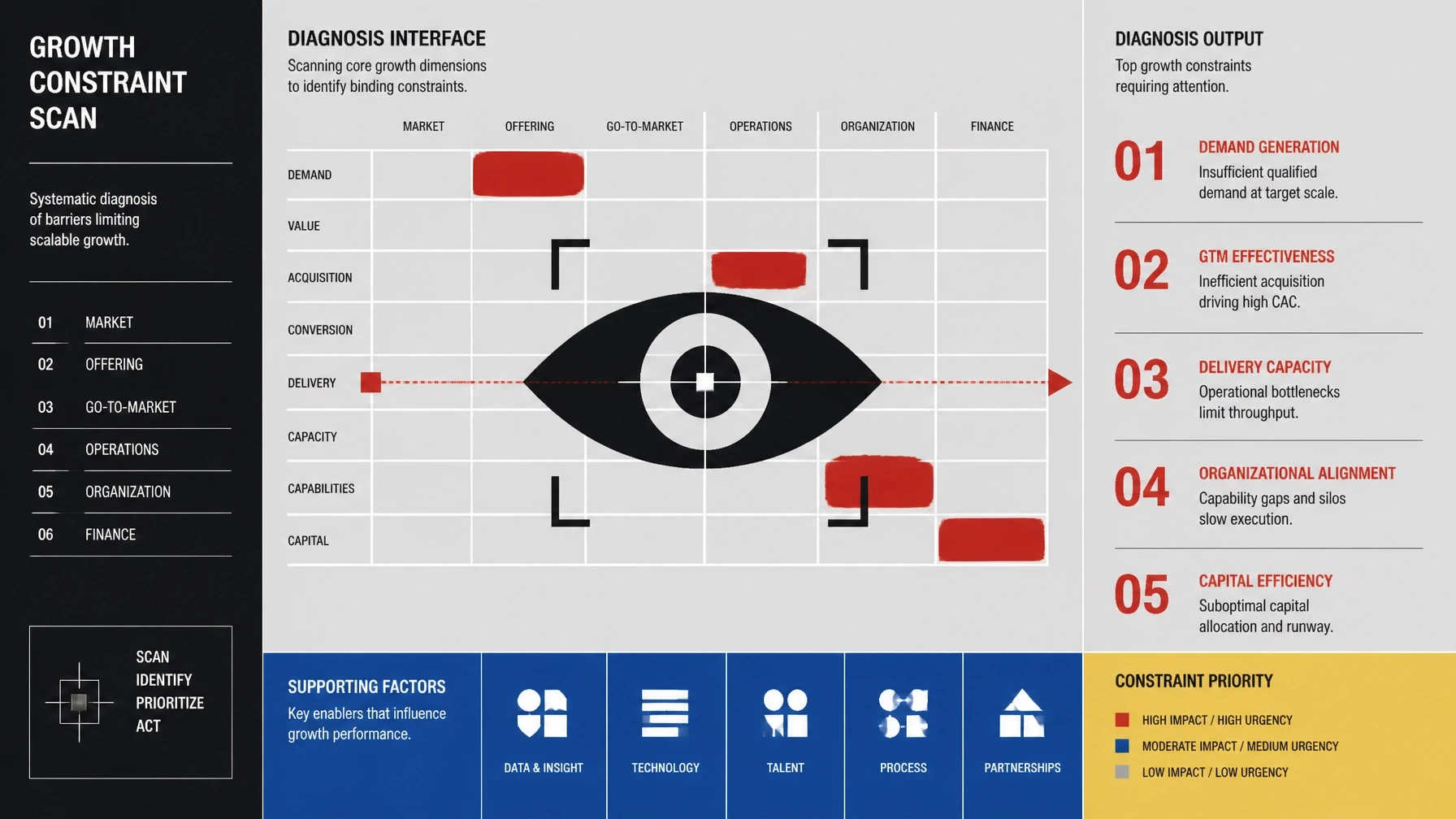
Visual: A red-lead Industrial Bauhaus friction scan showing an eye-like diagnostic marker over an interface grid, highlighting Growth Constraints tied to cognitive load, trust gaps, and motivation breakdowns.
How do you differentiate between 'Where' and 'Why'?
If you only look at your analytics dashboard, you’re looking at a scoreboard after the game is over. You see that you lost, but you don't see the missed passes.
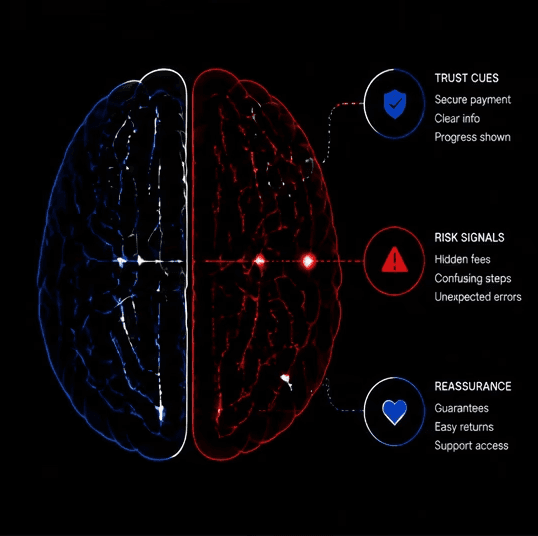
A high-converting audit uses Behavioral Analytics to decode intent. If a user spends three minutes hovering over a pricing table but doesn't click, they aren't "uninterested." They are "confused" or "uncertain." They are looking for information that isn't there.
We often see SaaS companies struggle with converting trial users to customers. The "where" is the end of the 14-day trial. The "why" is often found in session recordings showing that users never reached their "Aha! moment" because the onboarding was too technical. Without the qualitative "why," the audit would simply suggest "send more trial-ending emails," which would only annoy an already frustrated user.
What does the structure of a high-converting audit actually look like?
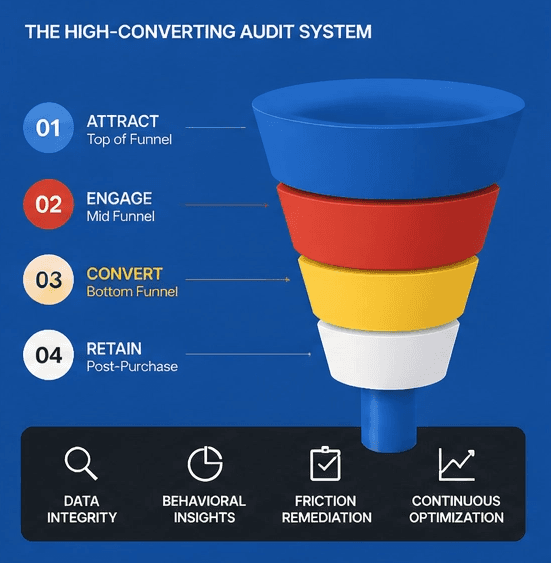
A high-converting audit follows a Bento Grid-like logic: organized, modular, and easy to digest. But the structure matters less than the sequence. Weak audits jump straight to recommendations. Strong audits build from diagnosis.
Inside a UX-to-Conversion Operating System, the audit is the first diagnostic pass across four pillars:
Data: Auditing tracking quality, segmentation, attribution logic, and measurement confidence.
Experience: Identifying the exact moments where motivation drops, trust breaks, or cognitive load spikes.
Decision-making: Checking whether priorities, ownership, and business goals align with what the evidence is saying.
Execution: Assessing implementation readiness, testing velocity, and how quickly insights can become shipped improvements.
This is the difference between a "leaky bucket" audit and an operating system audit. The first gives you isolated tactics. The second gives you the foundation for a business capability: a better way to interpret customer behavior, prioritize opportunities, and make smarter growth decisions over time.
The end goal isn't just to "fix the site." It’s to build a permanent CRO capability inside the business. It’s about moving from "I think this will work" to "the data, the experience, and the operating rhythm suggest this will work."
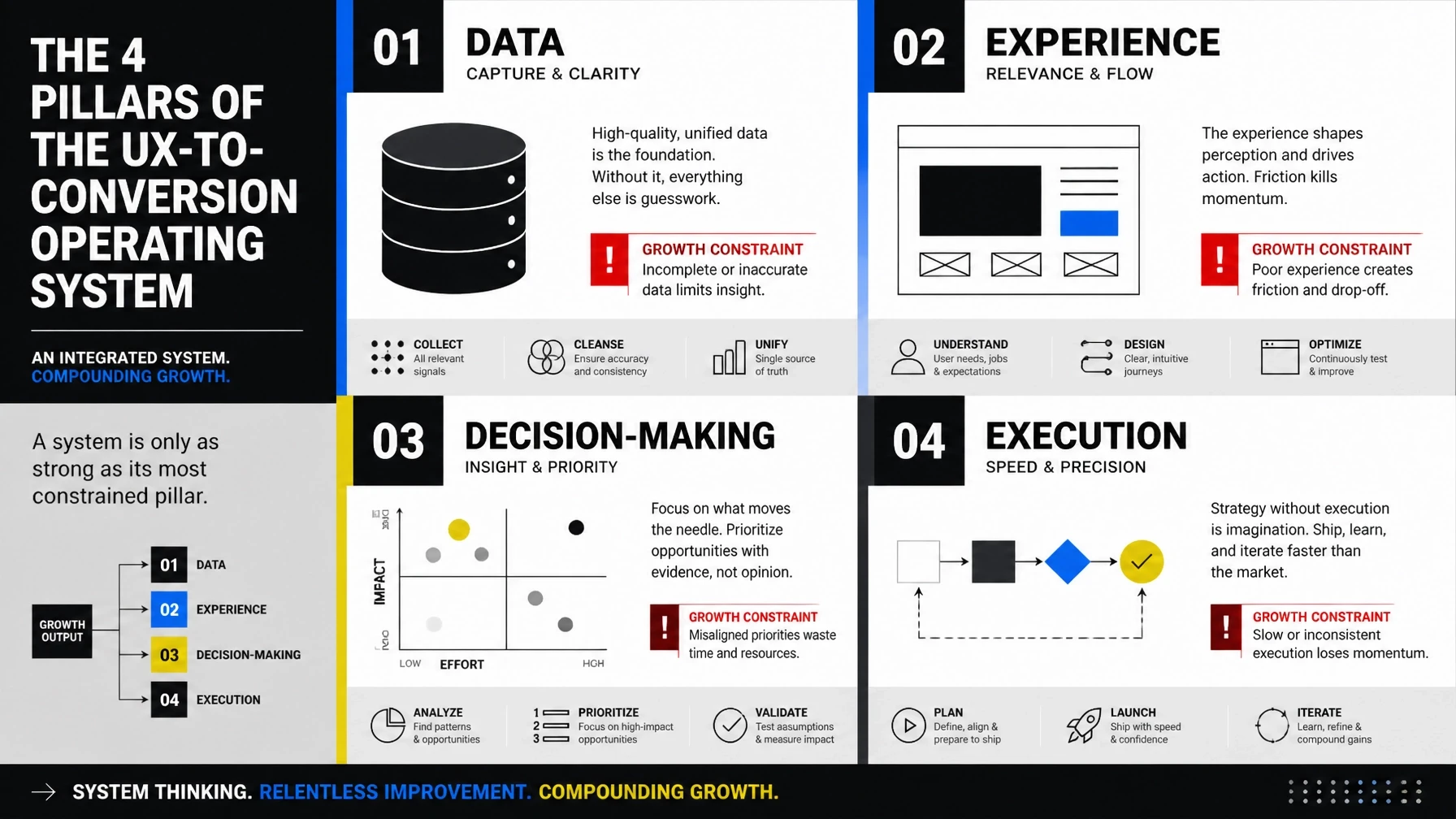
Visual: A complex red-lead Swiss/Bento Grid showing the four pillars of the UX-to-Conversion Operating System—Data, Experience, Decision-making, and Execution—with Growth Constraints highlighted across each module.
How does a high-converting audit act as the gatekeeper for retainer fit?
This is where transparent consulting matters. A serious audit doesn't automatically roll into a monthly engagement just because there are issues to fix. It functions like a gatekeeper. The point is to determine whether your business has enough upside, enough internal clarity, and enough decision-making readiness to benefit from an ongoing strategic program.
Inside a UX-to-Conversion Operating System, that question gets sharper: is this business ready to turn diagnosis into a repeatable capability? The audit should show whether the core Growth Constraints are isolated and solvable, or whether they’re spread across Data, Experience, Decision-making, and Execution in a way that would stall momentum.
Two lenses matter most here:
Revenue Surface: How much meaningful upside exists across the current customer journey? This includes high-traffic pages, high-intent flows, pricing pages, product detail pages, checkout steps, demo paths, onboarding moments, and post-click experiences that influence revenue.
Decision Complexity: How hard is it for your organization to actually implement and learn from optimization work? This includes stakeholder alignment, dev capacity, approval speed, data quality, testing velocity, and how many teams need to sign off before anything goes live.
A brand can have plenty of obvious issues and still be a poor fit for a retainer. If the Revenue Surface is narrow, there may not be enough room to justify ongoing monthly investment. If the Decision Complexity is too high, the work can stall before it ever compounds. In both cases, the audit is doing its job by making that clear early.
That’s the operating system view in action. Instead of asking, "What’s broken?" the better question is, "Is this business structurally ready to turn optimization into a growth capability?"
What determines whether an audit turns into a partnership?
A transparent consulting model makes the next step conditional. Not every audit should become a retainer, and that’s a good thing. The audit creates the evidence. The scorecard translates that evidence into a clear go or no-go decision.
The Retainer Fit Scorecard should answer questions like:
Is there enough Revenue Surface to support ongoing experimentation?
Is the buying journey important enough to revenue that improvement would matter at the P&L level?
Can the team ship changes consistently?
Do stakeholders agree on the primary growth objective?
Is tracking reliable enough to measure lift without guessing?
Are there enough high-confidence hypotheses to sustain a monthly cadence?
Is Pain Intensity high enough that the business genuinely needs intervention now?
Is Budget Maturity strong enough to support a full monthly program at roughly $8k/mo?
Before a brand reaches that scorecard, the Discovery Call Checklist should already be doing some filtering. If 8+ boxes are checked, that's usually the minimum threshold for moving from a standalone audit into a real partnership. If they don't hit that threshold yet, that doesn't automatically mean "bad fit forever." It often means the business needs the audit first to build clarity, uncover Revenue Surface, and reduce uncertainty.
That matters most when the brand clearly feels the problem, but isn't operationally or financially ready for a retainer. If Pain Intensity is high but Budget Maturity is still catching up, the audit acts as the bridge. It gives the team a serious diagnostic, a clearer priority roadmap, and a way to move forward without pretending they’re ready for a full operating cadence they can’t yet support.
Those checklist boxes can include:
Clear ownership on the client side
A meaningful amount of existing traffic or demand
Revenue concentration in key pages or flows
Usable analytics and attribution
Reasonable implementation support
Leadership buy-in
A willingness to prioritize tests over opinions
An identifiable ICP or customer segment worth optimizing for
This keeps the process honest. The audit isn't a sales document dressed up as strategy. It's a decision tool. More importantly, it should clarify whether the business is ready to build a permanent CRO capability through the UX-to-Conversion Operating System, or whether foundational Growth Constraints still need to be addressed first.
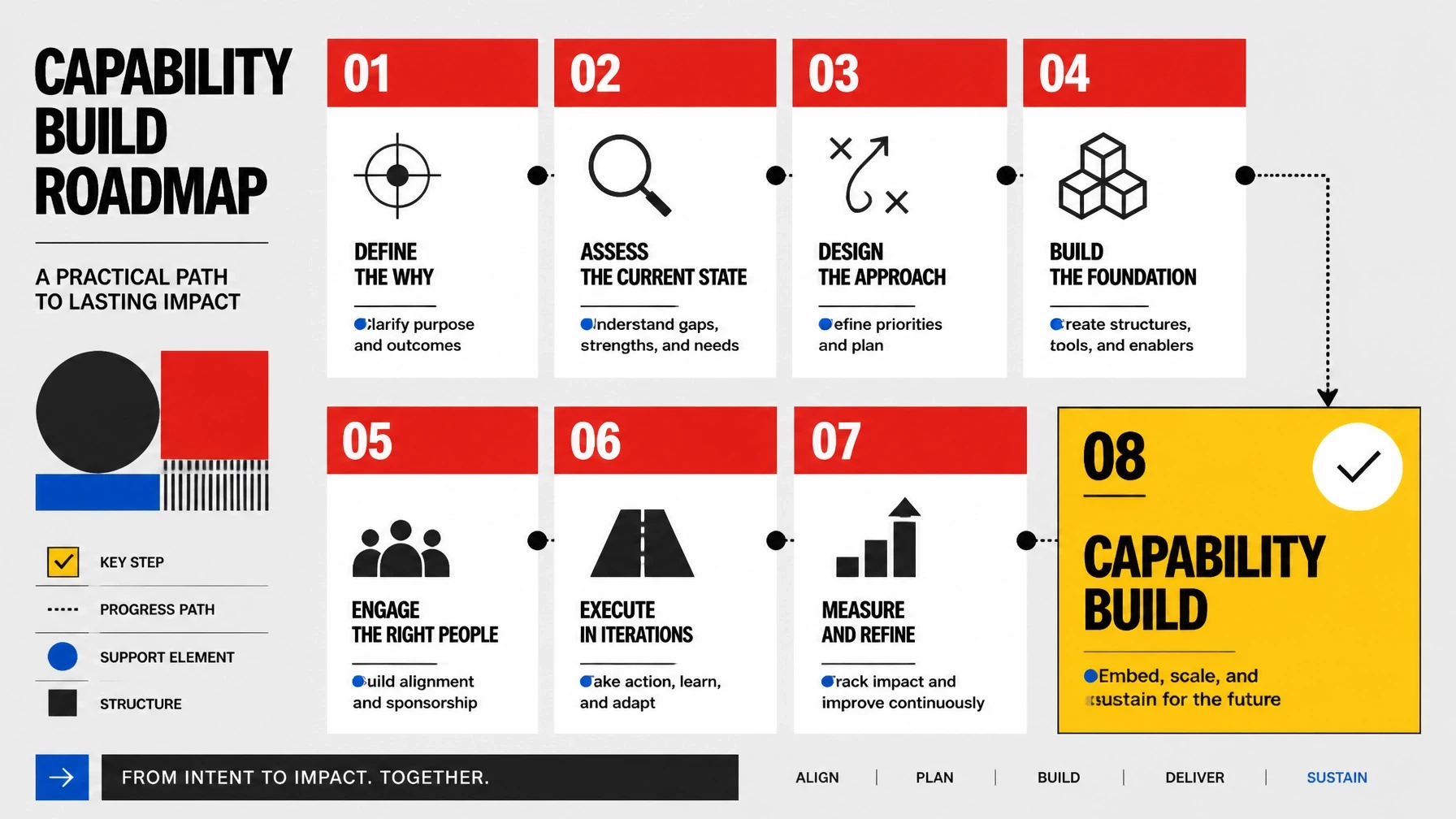
Visual: A clean light-gray Swiss/Bento roadmap checklist with red headers, yellow checkmarks, and "Capability Build" highlighted as the final step in the operating system rollout.
How to get started with a better audit today?
If you feel like your current website analysis is just going through the motions, it’s time to change your perspective. You don't need more data; you need better diagnosis.
Audit your audit: Does your current report identify Growth Constraints across Data, Experience, Decision-making, and Execution? If not, it’s probably a "leaky bucket" report, not a UX-to-Conversion Operating System diagnostic.
Identify your "Aha! Moment": For SaaS, find the one action that correlates most with long-term retention. For DTC, find the one piece of information that makes a customer stop price-comparing.
Start with "Why": Next time you see a drop-off on a page, don't ask "What should I change?" Ask "What is the user thinking right now that makes them want to leave?"
Build for capability, not cleanup: Treat the audit as the first layer of a permanent CRO capability, so future decisions get faster, clearer, and less opinion-driven.
Stop patching holes in a bucket that shouldn't even be holding that water. Start building a UX-to-Conversion Operating System that understands your customers, surfaces Growth Constraints early, and gives your team a more durable way to improve performance over time.
Ready to stop guessing?
More Insights
Explore ideas, tips, and trends to elevate your brand.