(
)
The Conversion Flip: How Psychology-Driven CRO Wins Over Skeptics
You’ve seen the dashboard. Traffic is up, your paid ads are hitting the right personas, and yet, the conversion rate remains stubbornly flat. When you bring this to the boardroom, the skeptics emerge.
They call Conversion Rate Optimization (CRO) "guessing with colors" or "moving buttons around." They want to see the ROI, but more importantly, they want to understand why users aren't buying despite a "premium" design.
The disconnect usually isn't the data itself: it’s the interpretation. Most optimization efforts focus on the "what" (the metrics) while ignoring the "why" (the psychology). To win over the skeptics: both the ones in your leadership team and the ones landing on your website: you need a shift in perspective.
We call this The Conversion Flip.
Why does raw data often fail to move the needle for leadership?
Data tracks the footprint, not the intent. Skeptics see a 2% conversion rate and assume a traffic problem; psychology-driven CRO proves it’s a friction problem by explaining the subconscious barriers that data alone cannot visualize.
Numbers are comfortable, but they are also deceptive. You can see that 70% of users drop off at the checkout page, but Google Analytics won't tell you if they left because they felt a sudden spike in "purchase regret" or if the shipping cost triggered an "unfairness" heuristic.
When you present a heatmap to a skeptical CEO, they might see a sea of red and think, "Great, people are clicking the hero image." A psychology-driven approach flips that: "People are clicking the hero image because they are desperately looking for a value proposition that isn't there."
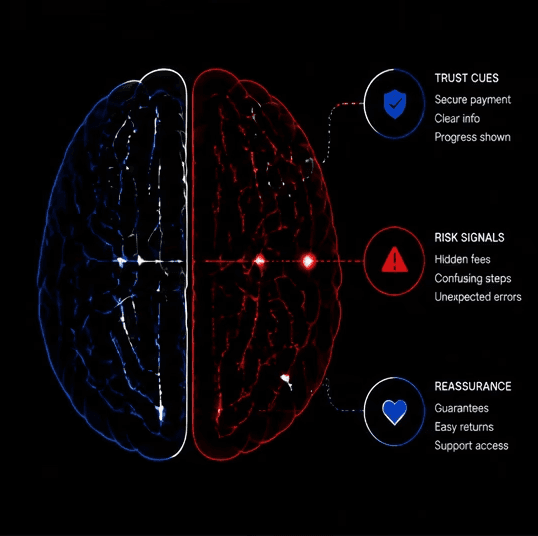
Research shows that most purchasing decisions are made subconsciously, with logic used only afterward to justify the choice. If your optimization strategy starts with logic (features, prices, specs) before addressing the emotional and subconscious barriers, you’re fighting an uphill battle against human biology. Skeptics become believers when you stop talking about "optimizing pages" and start talking about optimizing journeys based on how the brain actually processes risk.
What exactly is the 'Conversion Flip' framework?
The Conversion Flip is a methodology that shifts focus from "How do we make them buy?" to "Why are they stopping themselves from buying?" It prioritizes the removal of psychological friction over the addition of persuasive gimmicks.
Most marketing is additive. We add pop-ups, add countdown timers, and add "as seen on" logos. The Conversion Flip suggests that for high-growth DTC and SaaS brands, the biggest gains aren't found in what you add, but in what you remove: specifically, the cognitive load.
The framework operates on three pillars:
Barrier Identification: Using behavioral science to find where the user feels "unsafe" or "confused."
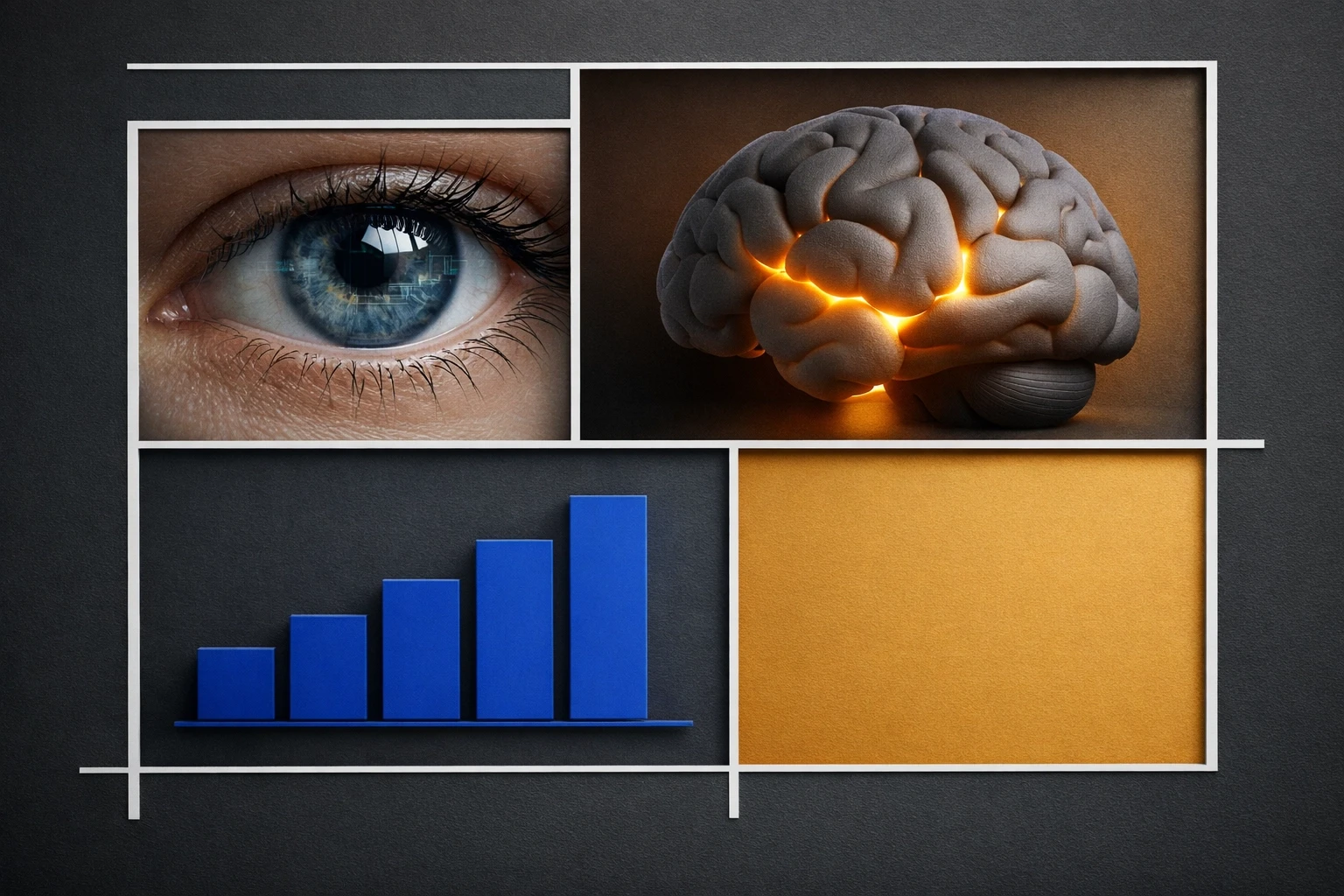
Cognitive Ease: Structuring information in a way that matches how the brain naturally scans (using principles like the Swiss International style or Bento Grid layouts).
Heuristic Alignment: Leveraging mental shortcuts: like social proof and authority: to bypass the "healthy skepticism" of the modern consumer.
When you flip the script, you stop asking why your traffic is high but conversions are low and start looking at the specific moments of hesitation. You move from being a "tinkerer" to a behavioral architect.
Why should you prioritize 'Healthy Skeptics' over 'Easy Wins'?
The "easy wins" are users who would have bought anyway. The real revenue growth lives in the "healthy skeptics": users who want your product but are held back by specific, addressable psychological barriers.
In the world of SaaS and premium DTC, your audience isn't impulsive. They are researchers. They are tired of over-hyped marketing. These are the "healthy skeptics." They are looking for reasons not to trust you.
If you only optimize for the low-hanging fruit: the users who are already sold: you’ll hit a growth ceiling very quickly. Psychology-driven CRO targets the skeptic by addressing "the elephant in the room." If your software is expensive, don't hide the price; explain the value through the lens of ROI. If your shipping takes ten days, don't bury it in the FAQ; frame it as a commitment to quality and carbon-neutral logistics.
By winning over the skeptic, you don't just get a conversion; you get a customer with higher Lifetime Value (LTV). They’ve done the mental work to trust you, which makes them much harder to lure away by a competitor’s flashier (but less substantive) landing page.

How do mental shortcuts (heuristics) dictate your conversion rate?
Users don't read; they scan. They use heuristics to decide in under 50 milliseconds if your site is trustworthy. If you fail the "instant clarity" test, no amount of logic will save the sale.
The human brain is lazy: it’s designed to conserve energy. When a user lands on your site, they aren't performing a deep analysis of your "About Us" page. They are using heuristics: mental shortcuts: to answer three questions:
Is this for me?
Can I trust this?
What do I do next?
This is where the 3-second audit comes in. If the visual hierarchy is cluttered, the brain experiences "cognitive friction." This friction is interpreted as a lack of trust.
Using a Bento Grid or Swiss International design style isn't just an aesthetic choice; it’s a psychological one. These layouts provide clear boundaries, predictable patterns, and a sense of order. This "ordered" environment lowers the user's guard. It signals that the brand is organized, professional, and reliable. When the brain doesn't have to work hard to understand the layout, it can spend that energy processing your value proposition.
Common Heuristics to Leverage:
The Authority Bias: Users are more likely to trust a brand backed by recognizable experts or certifications.
The Bandwagon Effect: Seeing that "10,000+ others" use the service reduces the perceived risk of a "bad" decision.
The Paradox of Choice: Too many options lead to "analysis paralysis." Reducing choices often leads to higher conversion rates.
How can you bridge the gap between business goals and user psychology?
Align your "North Star" metrics with the user's "Desired Outcome." Psychology-driven CRO succeeds when the user feels that the conversion is their own idea, not something they were pushed into.
The ultimate goal of the Conversion Flip is to make the "Buy" or "Sign Up" button the most logical next step for the user. This requires a deep understanding of the Risk vs. Reward ratio. Every time you ask a user for an action (an email, a click, a credit card), you are asking them to take a risk. Your job is to make the perceived reward significantly higher than that risk.
In SaaS, this might mean offering a "no credit card required" trial to lower the risk barrier. In DTC, it might mean using "user-generated content" (UGC) right next to the checkout button to provide emotional reassurance at the moment of highest friction.
Visuals play a massive role here. A clean, modular Bento Grid layout allows you to present multiple "trust signals" (press mentions, reviews, security badges) without overwhelming the primary call to action. It respects the user's intelligence by giving them the data they need to make a decision, organized in a way that respects their time.

How to get started with the Conversion Flip
If you’re ready to move beyond basic A/B testing and start implementing a psychology-first strategy, follow these steps:
Audit for Friction, Not Just Features: Go through your mobile checkout. Where does the "energy" drop? Where does the form feel like "work"?
Interview Your Skeptics: Talk to the people who didn't buy. Use exit-intent surveys to ask, "What was the one thing that almost stopped you from purchasing today?"
Simplify the Visual Narrative: Look at your landing page. Does it follow a clear, grid-based hierarchy? Use the Swiss International approach: if an element doesn't serve a specific purpose for the user's decision-making process, remove it.
Test Psychological Triggers: Don't just test a "Red vs. Green" button. Test "Social Proof" vs. "Scarcity." Test "Loss Aversion" vs. "Benefit Gain."
Measure the 'Why': Use session recordings (like Hotjar or Microsoft Clarity) to see where users hover and hesitate. These pauses are where the psychological battle is being won or lost.
The Conversion Flip isn't a one-time project; it’s a shift in organizational culture. When you start solving for human behavior, the metrics: and the skeptics( will naturally follow.)
More Insights
Explore ideas, tips, and trends to elevate your brand.